How This Calculator Works
This calculator scores the Diplomatic Security Service Physical Readiness Test (PRT) — the fitness
test that gates the DSS Special Agent application process and that active agents take
throughout their careersThe same PRT is given to applicants, special agent candidates, serving special agents, and Clarke DS Fellowship alternates and fellows. Serving agents take it every four months for their entire career.. You enter your sex, age, test-site elevation, and your results in three events, and the tool converts each result into a score and tells you whether you pass.
Unlike a simple pass/fail or points test, the PRT scores each event on a percentage scale tied to
performance categories, and applies a hard rule on top: you must score Satisfactory or better in every
event. For the two repetition events, more reps score higher; for the run, a lower time scores higher.
The Three Events & Protocol
The events are performed in a fixed order with a rest period between eachDSS’s current guide gives a five-minute rest between events. Its earlier PRT guide allowed a five-minute minimum and up to 30 minutes, depending on test-site logistics.:
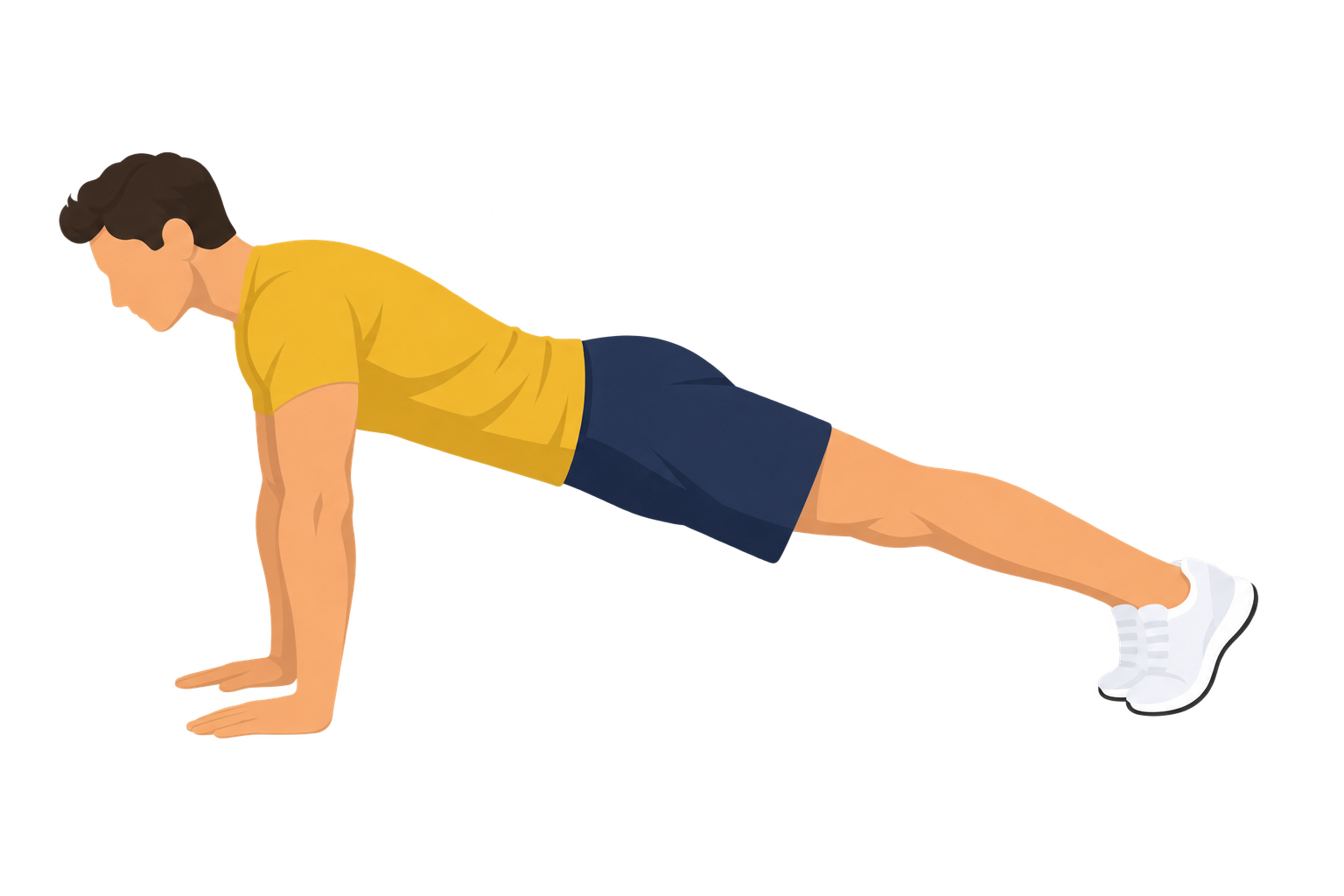
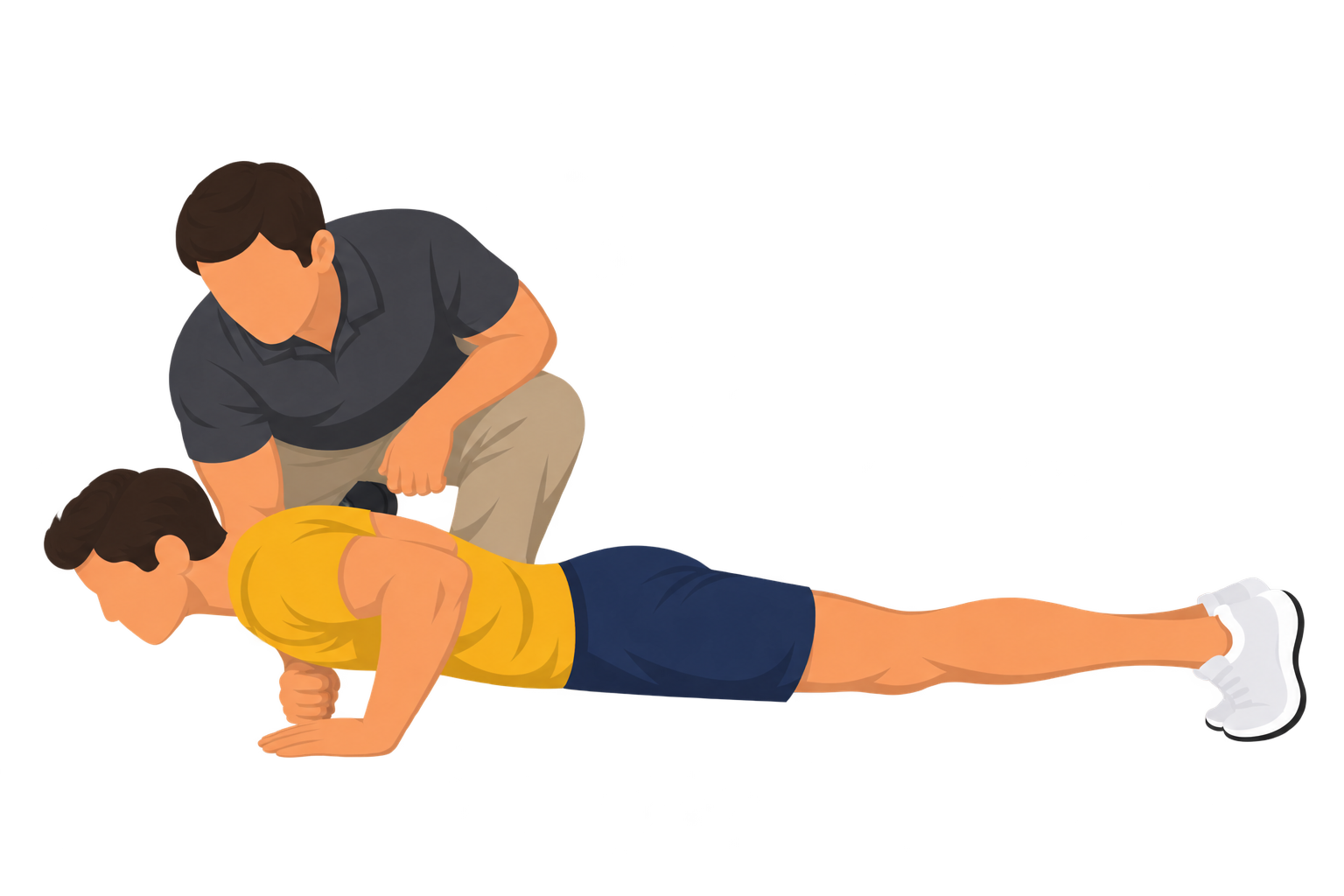
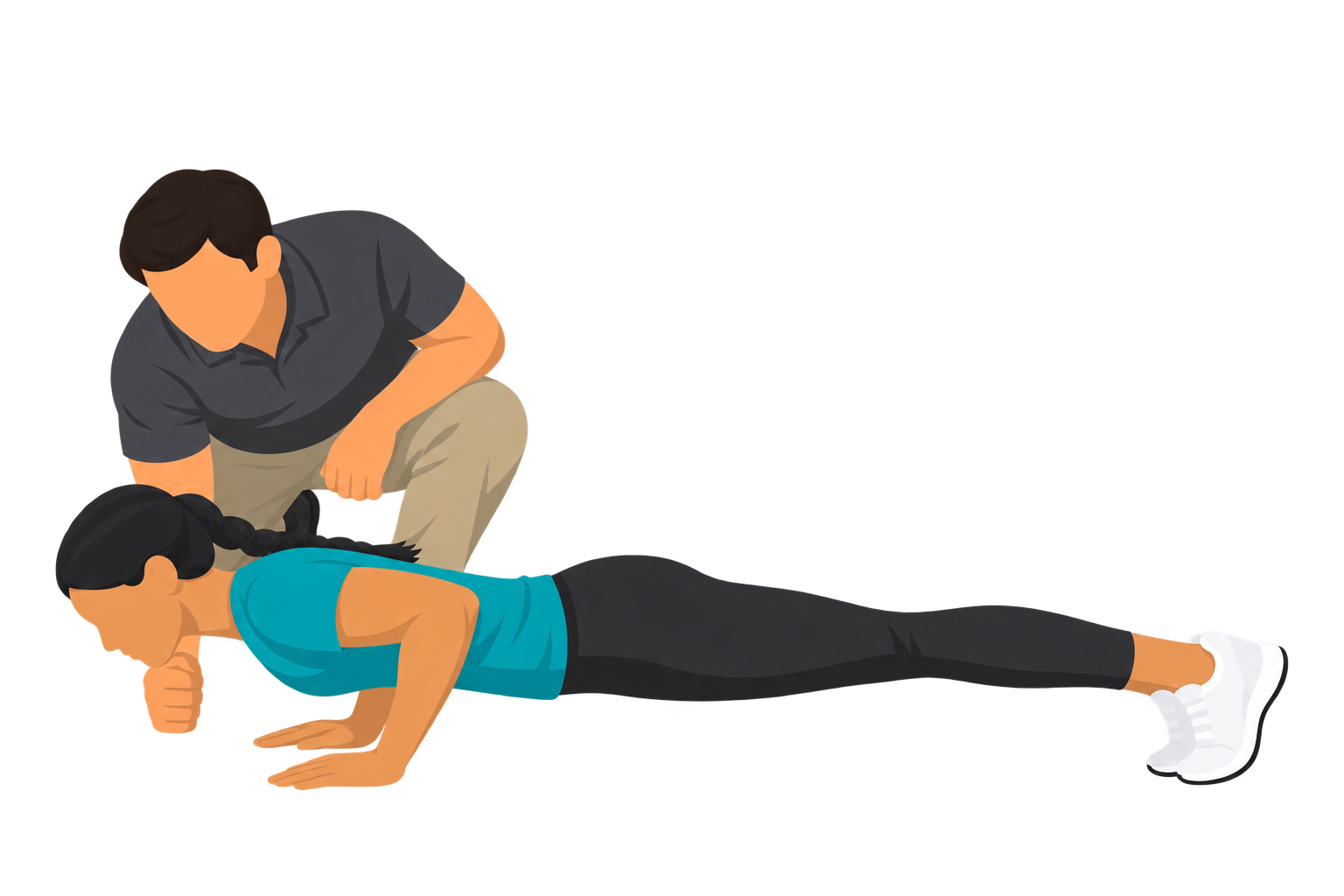
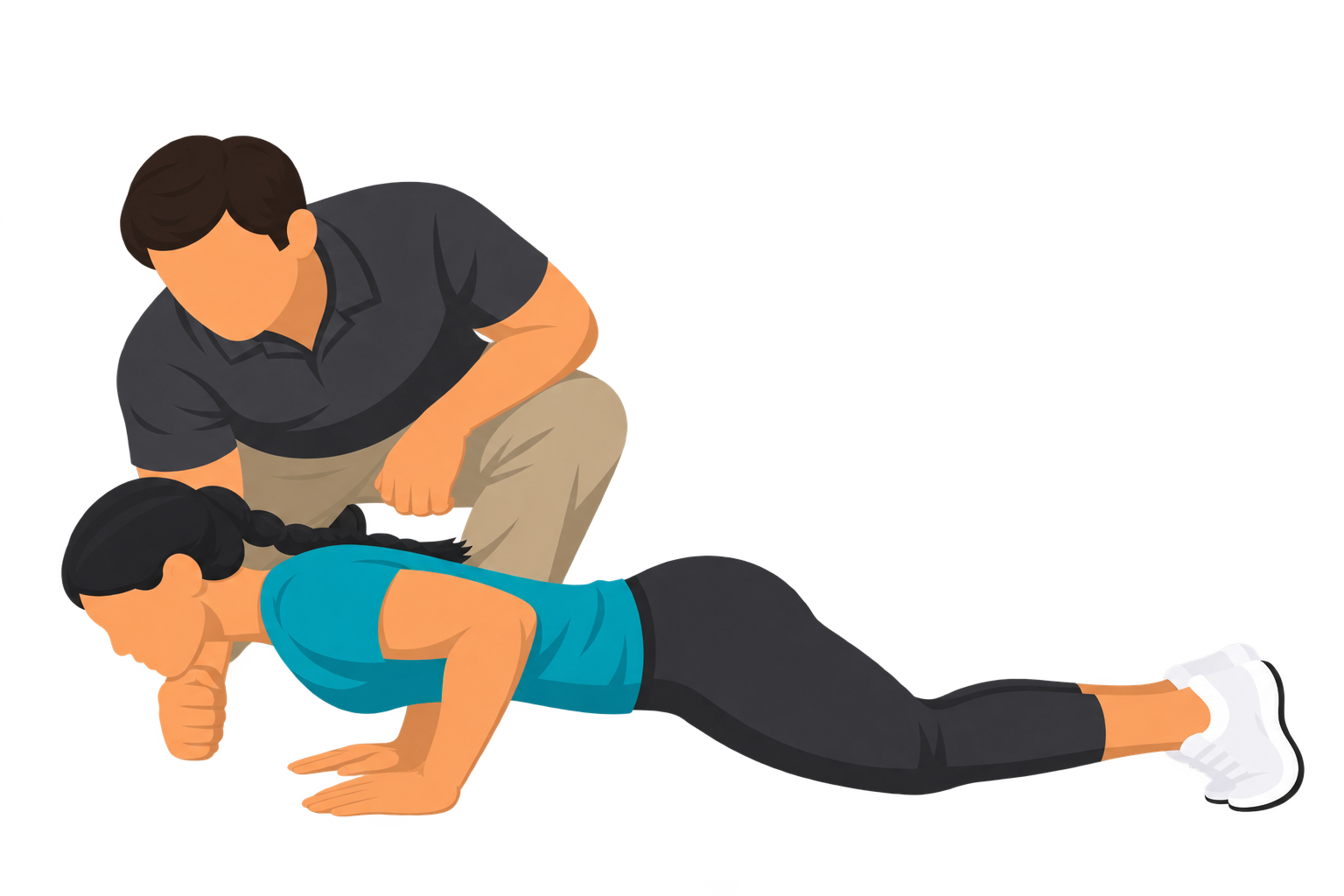
- Push-ups (first) — as many proper-form push-ups as you can in two minutes, with your hands
no wider than shoulder width, your feet together, and your body straight from head to heels. Each rep goes down
until your chest (men) or chin (women) touches the proctor’s fist, held at
least three inches off the ground, then back to straight elbows. You may rest only in the up position. The event
ends if you touch the ground with anything other than your hands and feet, lift a hand or foot, or rotate your
body.
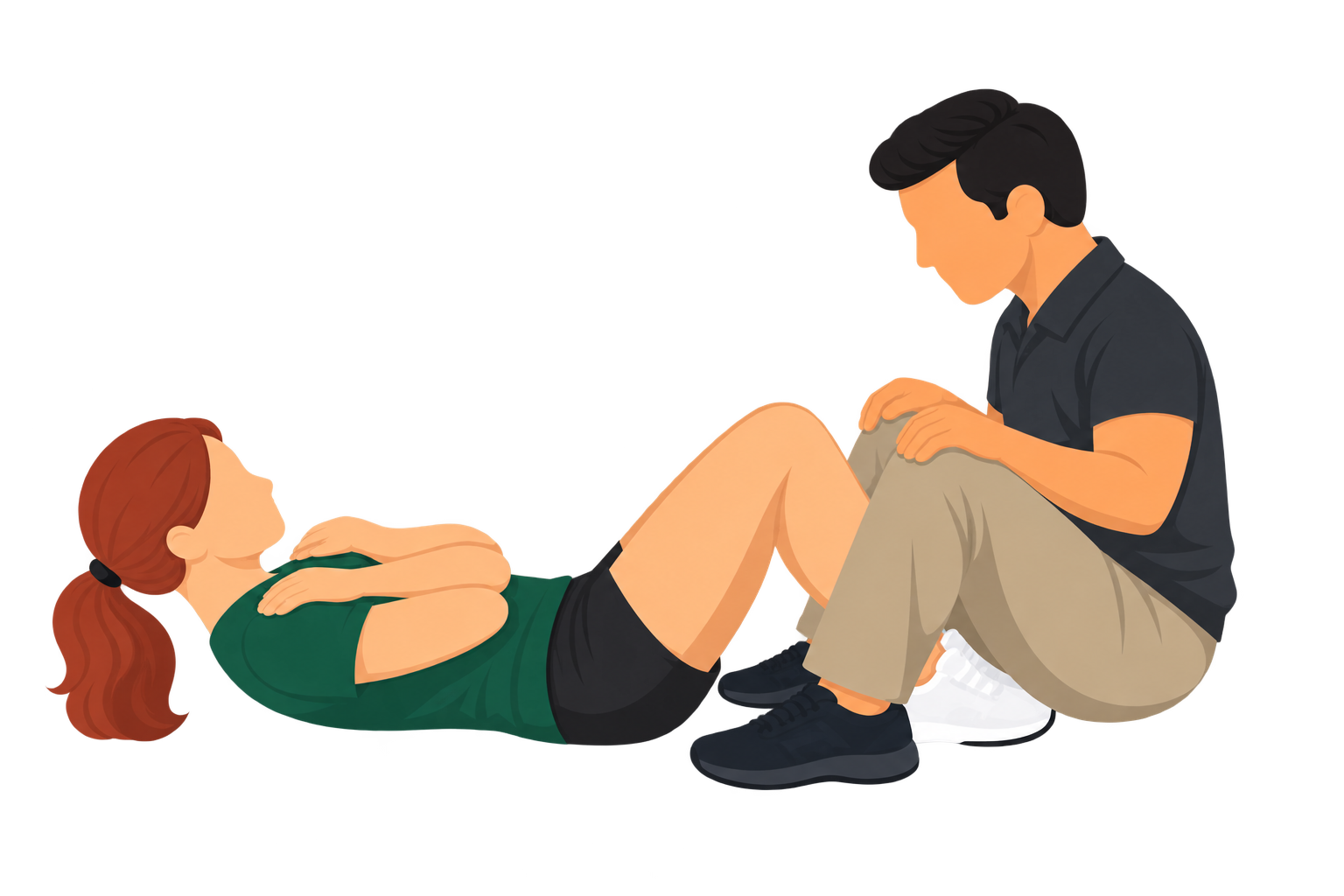
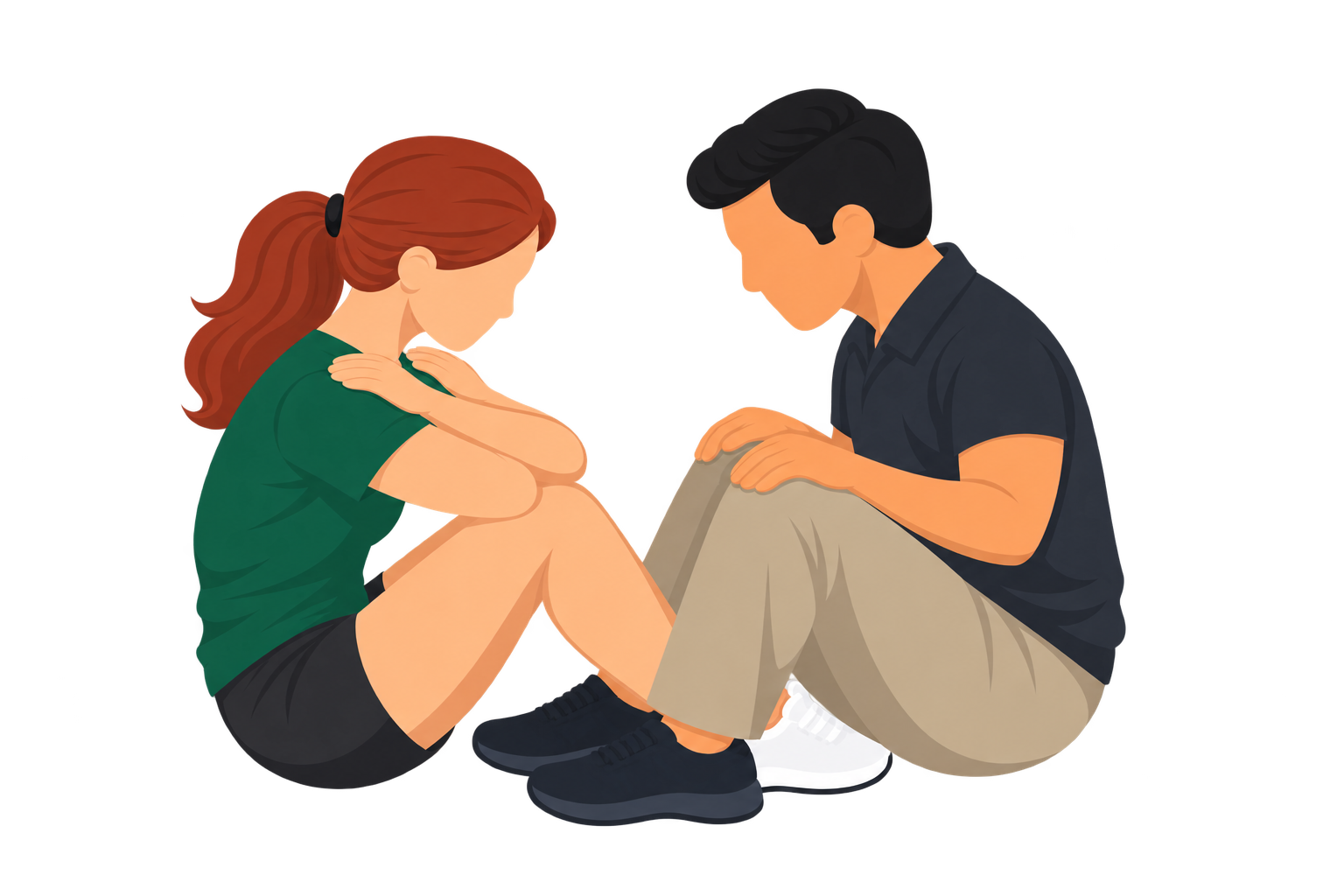
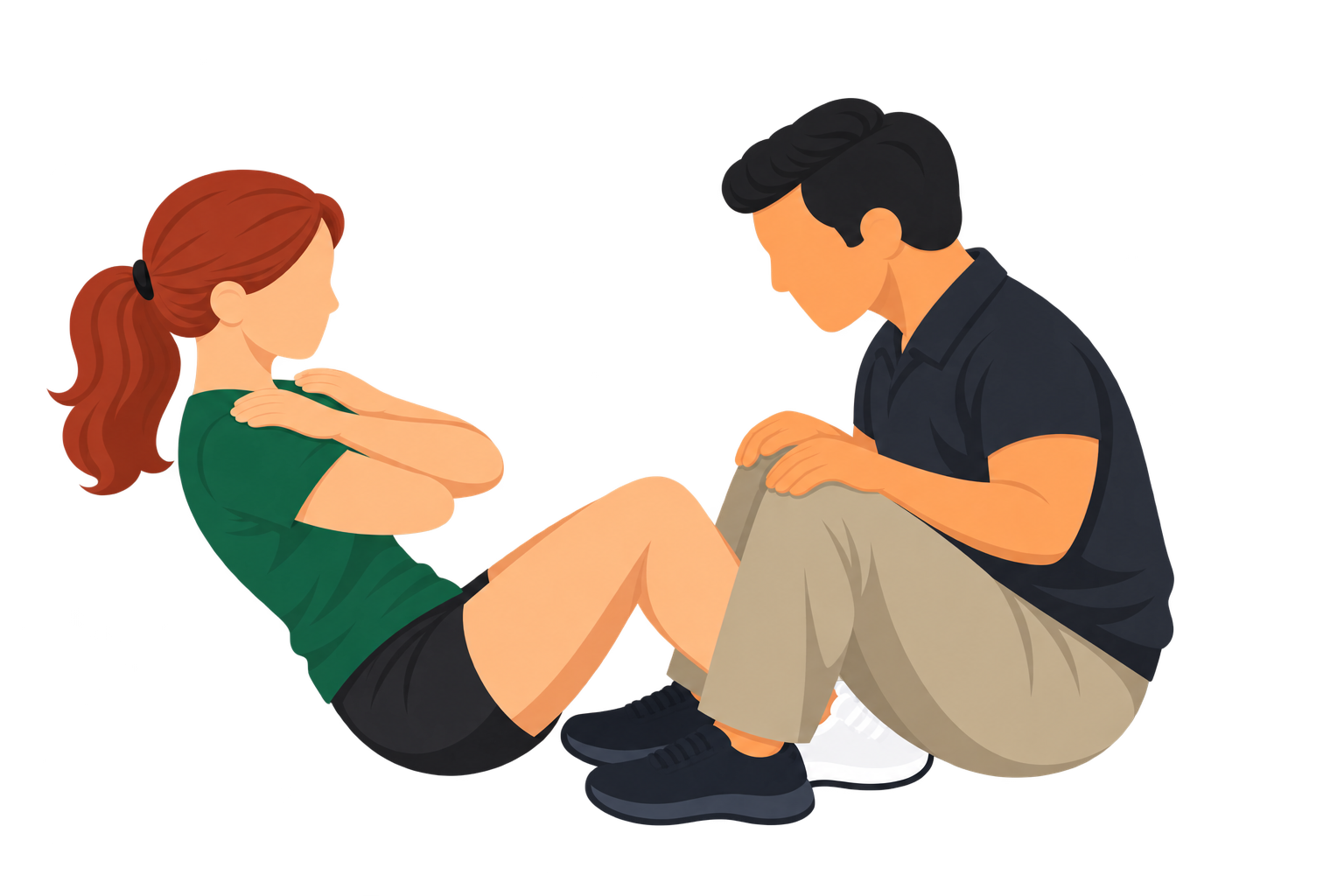
- Sit-ups (second) — as many proper-form sit-ups as you can in two minutes, with your knees
bent to 90 degrees and the proctor sitting on your feet. Arms stay folded across and touching
the chest, shoulders, or upper arms; elbows come up to touch the thighs and the lower back returns to the floor
each rep, with your buttocks staying on the ground. You may rest in the down position, but the clock keeps
running. The event ends if your legs are lowered or your feet lift off the floor.
- 1.5-Mile Run (third) — a timed run on a track, outdoor course, or
treadmillThe same time standards apply on a treadmill. DSS sources state the incline differently: 12 FAM 043 sets it to one degree uphill to offset the powered assistance, while the current applicant guide says 1.0 percent. Confirm the setting with your proctor., measuring aerobic capacity.
How Scoring Works
Each event earns a score from 50% up to 100%, and each score band has a name:
Outstanding (95–100%) · Excellent (85–90%) ·
Very Good (80%) · Good (70–75%) ·
Satisfactory (50–65%) · Unsatisfactory (below the 50% line).
The tool finds the highest score band your result reaches in each event. Then it applies the pass rule:
PRT pass rule: score Satisfactory (50%) or better in all three events.
Falling below the Satisfactory line in any one event fails the whole test.
So a brilliant run can't rescue a sub-Satisfactory push-up score — each event has to clear its own floor. DSS
does not combine the three event scores into one number, so the calculator shows how many of the three events you
cleared rather than an overall score.
Adjusted for Age, Sex, and Elevation
Besides age and sex, the PRT standards depend on test-site elevationDSS publishes one set of standards for test sites below 5,000 feet and another for sites above 5,000 feet. Only the run times differ between the two.. DSS publishes separate standards for test sites below and above 5,000 feet, and only the 1.5-mile run times differ: they allow more time above 5,000 feet, while the push-up and sit-up standards stay the same. That is why this calculator asks for elevation, and why changing it moves only the run column.
Two more details fall straight out of the official tables and are worth knowing: the sit-up standards are
identical for men and women (they vary by age alone), while the push-up and run standards differ
by sex. The calculator mirrors that structure exactly rather than imposing a uniform pattern.
Reading Your Result
The breakdown shows each event's score and category, colored by band, with anything under 50% flagged in red as
"< 50%." The headline shows how many of the three events reached Satisfactory and a PASS or FAIL verdict under
the all-three rule. If you fall short, the result names exactly which events dropped below Satisfactory.
How to Read the Scoring Scale
The scale table shows your specific standards for the selected sex, age, and elevation, from the 50% Satisfactory
floor up to 100%. A green line marks the minimum passing standard, and your achieved level in each event is shown
in bold in its column — so you can see both where you landed and what the next band up requires.
A Note on Data Accuracy
The standards in this calculator are exact, reproduced verbatim from the official U.S. Department
of State DSS PRT standards tables for both elevation bands — nothing is estimated or interpolated. The State
Department notes the PRT and its standards are subject to revision at any time, so treat a result
here as an accurate read of the published tables and confirm the current standards at
careers.state.gov or with DS Recruitment before relying on it.
Why These Fitness Qualities Matter
The three events sample complementary capacities. Push-ups measure upper-body muscular endurance
and sit-ups measure core endurance — both sustained over a full two minutes — while the
1.5-mile run measures aerobic capacity. DSS Special Agents protect personnel and facilities in
high-threat environments worldwide, work that can demand strength, stamina, and the ability to act under stress,
so the PRT checks a rounded base rather than a single quality.
The strengths of this kind of test are objectivity and repeatability with minimal equipment. Its limit is that it
is a general fitness screen, not a simulation of the job — a strong score shows a solid physical base, not job
competence by itself.
Data Sources and Methodology
- U.S. Department of State — Age/Gender PRT Standards (PRT Test Standards PDF, careers.state.gov).
The full tables for both elevation bands (below and above 5,000 ft), giving the 50–100% scoring scale and
performance categories for sit-ups, push-ups, and the 1.5-mile run by age and sex. This is the file DSS’s
PRT self-certification form points to.
- DSS Physical Readiness Test Guide (careers.state.gov, updated December 9, 2025). The three
events and their order, the five-minute rest, the movement protocols and termination rules, the treadmill
provision, the minimum Satisfactory standards, the Satisfactory pass requirement, testing every four months for
serving agents, and the two-attempt rule with a 60-day wait.
- 12 FAM 043, DS Physical Readiness and Fitness for Duty Programs. That the run may be done
outdoors or on a treadmill set to one degree uphill with the same time standards, and that standards apply by
age, sex, and test-site altitude. The FAM calls the test the Physical Fitness Test (PFT).
A note on methodology: scores are read directly from the published tables — for each event the
tool returns the highest band whose standard your result meets. It adds no combined score; the pass/fail verdict
follows the official all-three-Satisfactory rule.
Limitations and Important Caveats
- Not an official result. Only a DSS-proctored PRT produces an official score. This tool is
for self-assessment and planning.
- Standards can change. The Department of State may revise the PRT at any time; confirm the
current tables at careers.state.gov.
- Every event has a floor. A score below Satisfactory in any single event fails the test,
regardless of how strong the others are.
- Two attempts. Applicants who fail get one more try after a 60-day wait; a second failure
ends the candidacy.
- Fatigue is real. The events run in sequence; fresh, isolated attempts can overstate your
true result.
- Protocol fidelity. Strict push-up and sit-up form and an accurately measured run (or a
treadmill at the specified incline) are what make your numbers comparable.
Disclaimer:
This calculator provides an estimate based on the publicly available U.S. Department of State Diplomatic Security
Service Physical Readiness Test standards and is intended for general informational and training-reference purposes
only. It is not affiliated with, endorsed by, or an official tool of the DSS or the U.S. Department of State, and it
does not produce an official score. The PRT involves maximal-effort calisthenics and a timed 1.5-mile run; stop
immediately if you experience chest pain, shortness of breath, dizziness, or joint pain. This tool is not medical,
fitness, or training advice. Consult a healthcare provider before beginning a new exercise or testing program,
especially if you have a heart condition, a recent injury, or any condition aggravated by intense exertion.